

Kona Coffee vs. Kona Blend: What's Actually in Your Bag?
You've seen "Kona" on the label. The packaging looks beautiful. The price feels reasonable...maybe even like a deal. But before you add it to your cart, there's something worth knowing: a bag labeled "Kona" might contain as little as 10% actual Kona coffee. The other 90%? Cheaper beans, often sourced from overseas.
It's not a minor technicality. It's the difference between one of the rarest, most distinctive coffees in the world and a mediocre blend riding on its reputation. Here's what you need to know before you buy.
What Makes 100% Kona Coffee Special
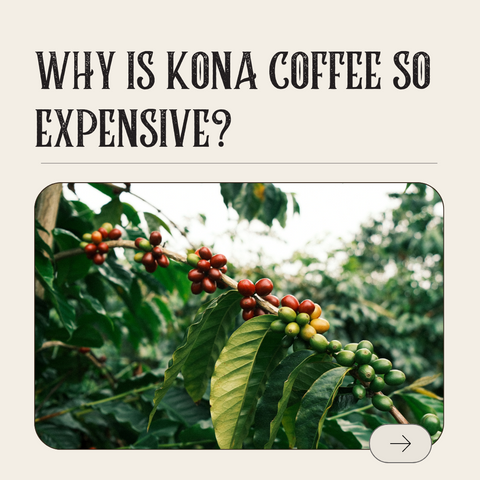
Kona coffee is grown in a very specific place: the volcanic slopes of Mauna Loa and Hualalai on Hawaii's Big Island, in a region called the Kona Coffee Belt. The elevation, rich volcanic soil, and pattern of sunny mornings and gentle afternoon rain showers create conditions that can't be replicated anywhere else on Earth. That's not marketing language; it's geography.
Kona coffee trees produce a relatively small yield. Every cherry is handpicked at peak ripeness, then carefully processed and roasted. This labor-intensive process, combined with the limited growing region, means genuine 100% Kona coffee is naturally more expensive to produce than commodity beans. That cost reflects real value.
When you drink a properly roasted 100% Kona coffee, you notice it: a smooth, medium-bodied cup with a clean finish, often with notes of milk chocolate, brown sugar, and a brightness that doesn't tip into bitterness. It's why coffee lovers who try the real thing rarely go back.
What Is a Kona Blend?
Hawaii law allows any coffee labeled a "Kona Blend" to contain as little as 10% Kona coffee. The remaining 90% is typically lower-quality Arabica or Robusta sourced from South America, Africa, or Southeast Asia.
There's no requirement that the other 90% be labeled, identified by origin, or meet any quality standard. You're paying for the cachet of Kona while mostly drinking something entirely different.
This practice is legal. It is also, to put it plainly, misleading. It has frustrated Kona farmers and serious coffee drinkers for decades. Some blends are priced nearly as high as 100% Kona, leaning on the "Kona" name while delivering a fraction of the experience.
How to Spot the Difference
The label is your first clue. Here's what to look for:
| What the Label Says | What It Means |
|---|---|
| 100% Kona Coffee | Every bean comes from the Kona Coffee Belt. This is the real thing. |
| Kona Blend | At least 10% Kona. Up to 90% other (unspecified) beans. |
| Kona-Style | No legal definition. Likely contains little or no actual Kona coffee. |
| Hawaiian Coffee | Could be from other Hawaiian growing regions (Ka'u, Maui, etc.) and not necessarily Kona. |
| Estate Kona or Farm-Direct Kona | Typically 100% Kona from a specific, named farm. A quality signal. |
If the word "Blend" appears anywhere on the bag, the coffee is not 100% Kona, full stop. When in doubt, look for explicit "100% Kona Coffee" language, ideally with a named farm or estate.
Price is another signal, though an imperfect one. Genuine 100% Kona typically runs $30 to $60+ per pound depending on roast and variety (peaberry commands a premium). If a bag says "Kona" and costs $12, you're almost certainly buying a blend.
Why Farm-Direct Matters
Buying 100% Kona coffee directly from a farm cuts out the middlemen who sometimes obscure sourcing. When you order from a farm that grows, roasts, and ships its own coffee, like we do here at Kona Mountain Coffee, you know exactly where your beans came from and how recently they were roasted.
Our coffee is grown on the slopes of Mauna Loa in Kailua-Kona. We roast in small batches, daily. There's no blend, no filler, and no guesswork about what's in your bag.
The traceability of farm-direct coffee also means better quality control at every step. Mass-produced blends are roasted in bulk to accommodate the varying characteristics of beans from multiple origins. Single-origin 100% Kona is roasted to highlight the specific profile of those beans, from that farm, from that harvest.
The Bottom Line
If you've been buying Kona blends thinking you were getting the real Kona experience, you're not alone, and it's not your fault. The packaging is often deliberately crafted to imply more than it delivers.
The simplest rule: look for "100% Kona Coffee" on the label, buy from a farm you can name, and if the price seems too good to be true, it probably is.
Kona coffee earned its reputation honestly, through remarkable growing conditions, dedicated farmers, and a flavor profile that stands on its own. It deserves to be experienced the way it was actually grown.
Comments (0)
There are no comments for this article. Be the first one to leave a message!